A Bergen County single-family seller opened July 2026 with real leverage: May 2026 data from NJ REALTORS showed 775 new single-family listings, 384 closed sales, a $930,000 median sale price, a 28-day median time on market, sellers receiving an average of 105.3% of list price, and only 2.4 months of supply. That headline reads like a green light. It is not the whole picture.
The friction shows up two weeks after acceptance, when a buyer's inspector walks the yard of a 1938 colonial in Ridgewood and finds a copper fill pipe against the foundation. The deal that priced at 105% of ask is now a negotiation about a buried oil tank, soil testing, and who pays for what. That conversation, not the offer count, is where 2026 Bergen County transactions are actually being decided.
The number under the number
The seller-favored data is real, but it is not uniform. Bergen townhouses and condos told a slightly different story in May, with 333 new listings, 156 closed sales, a $561,000 median, and a longer 40 days on market. That segment sat at 3.7 months of supply, giving buyers meaningfully more breathing room than the single-family side. By the week of July 4, 2026, active countywide inventory had ticked up to 1,547 listings, and Freddie Mac reported the 30-year fixed averaged 6.58% as of July 23, 2026.
Buyers still show up. The Mortgage Bankers Association reported total mortgage applications rose 1.9% for the week ending July 17, 2026. What changed is what they do at the inspection table. A more selective buyer, carrying a 6.58% note, is not eating a 1955 oil line to keep a deal alive. They are asking for a credit, and they are getting one.
What Bergen County inspectors are actually flagging in older stock
The county's housing stock is not one thing. Ridgewood and Glen Rock have older, established neighborhoods with homes that often come with aging plumbing or electrical components, while Mahwah, Paramus, and Montvale include a mix of newer developments and mid-century properties that show different types of wear. In older communities like Oradell, Rutherford, and River Edge, plumbing or electrical systems may be outdated and require upgrades. In towns like Ramsey, Wyckoff, and Upper Saddle River, long winters and frequent temperature swings can lead to foundation cracks, roof deterioration, and aging exterior materials.
The pattern of findings that shows up most often in Bergen inspection reports:
- Buried oil tanks and their evidence. A fill cap, a vent pipe, or an abandoned copper line in the basement counts as evidence of a tank, and inspectors specifically look for these because sales fall apart when buyers' inspectors find fill pipes sellers claimed to know nothing about.
- Sewer laterals under stress. Many Bergen homes were built before the 1950s and may have outdated sewer systems prone to cracks, root intrusions, and blockages, and the county's high water table adds stress to sewer lines.
- Aging service panels and knob-and-tube remnants in Ridgewood, Glen Rock, and the pre-war pockets of Oradell and Rutherford.
- Wood-destroying insects. Termites are a common problem in Bergen County due to humidity and mature tree canopy, with the eastern subterranean termite the most common type.
- Radon, still worth measuring in basements across the northern half of the county.
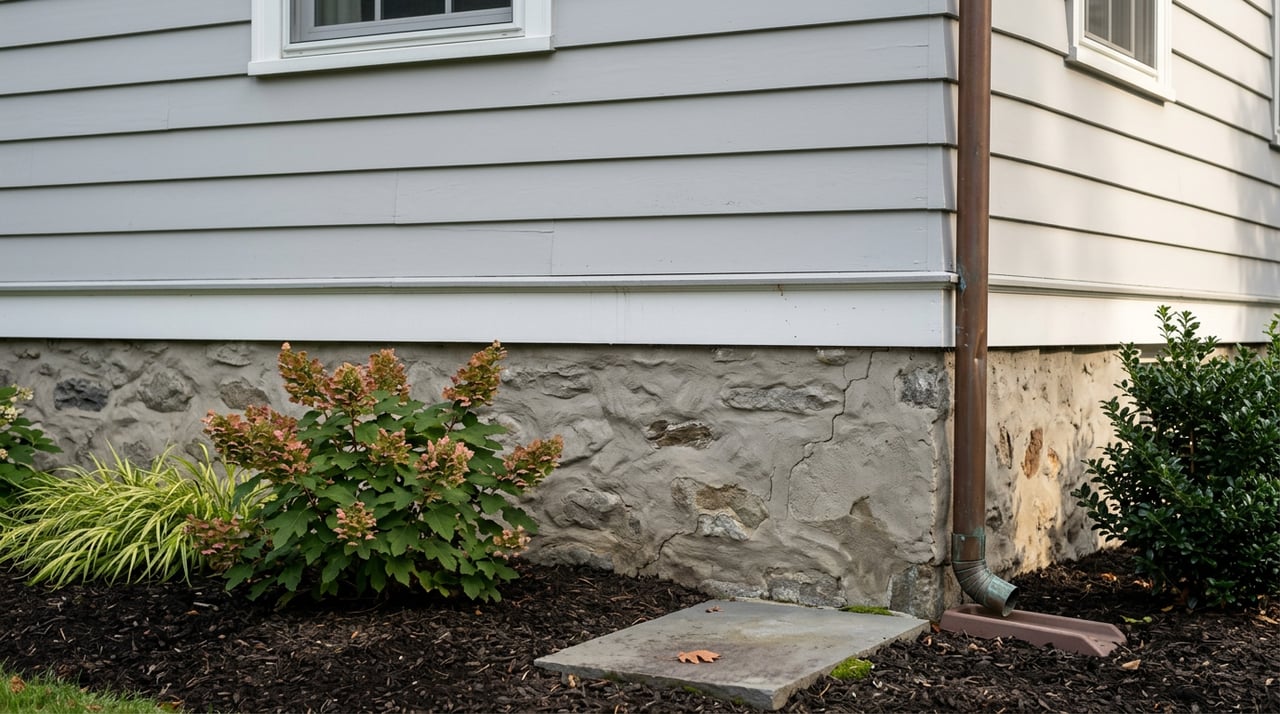
- Grading and downspout discharge that push water toward foundations rather than away.
A standard Bergen County home inspection runs $400 to $700. The specialty add-ons, the sewer scope and the tank sweep, are the ones that change deal outcomes.
The oil tank problem is really a disclosure problem
Underground storage tanks are the single most expensive surprise in a Bergen resale, and they are also the least forgiving under New Jersey law. New Jersey requires sellers to disclose any known underground storage tank on the property in the Seller's Property Condition Disclosure, a mandatory document in every NJ real estate transaction, and non-disclosure is not an option. That obligation covers more ground than most sellers realize. Active above-ground tanks, inactive above-ground tanks, buried tanks whether active or abandoned in place, and previously removed tanks with their NJDEP closure reports all get disclosed.
"As-is" does not undo that.
Under New Jersey law, selling a property "as is" does not alleviate the base requirement that the property is fit to live in, and the implied warranty of habitability means sellers must disclose any known, latent, material defects, including an underground oil tank, even if the property is sold "as is."
The financial exposure follows the same logic. Removal runs roughly $2,000 to $4,500, with remediation of $3,000 to $15,000 or more if contamination exists. Two other parties will weigh in before the seller does. For non-cash buyers, the tank can be a deal-breaker because many mortgage lenders will not finance properties with underground oil tanks, and many homeowners insurance providers will not cover them. Abandonment in place is legal in certain circumstances, but the tank must be emptied, cleaned, and filled with sand or foam, soil testing is still recommended, and documentation must be filed with the local municipality.
Here is what the sequence and cost look like when a Bergen seller decides to handle it before listing rather than during attorney review:
| Step | Typical Bergen cost | Time |
|---|---|---|
| Tank sweep (radar scan) | $300 to $600 | Same day |
| UST removal, clean soil | $2,000 to $4,500 | 1 to 2 weeks |
| Remediation if contaminated | $3,000 to $15,000+ | 2 to 8+ weeks |
| Full removal-to-closure process | ~ | 4 to 8 weeks |
The math is unforgiving in either direction. A seller who waits until a buyer's inspector finds the fill pipe gives up the timing advantage, and often the price. New Jersey law requires sellers to disclose known material conditions including an underground oil tank whether active, abandoned, or previously removed, with documentation of installation, decommissioning, or removal and any soil testing, and failing to disclose can derail a transaction or expose a seller to post-closing disputes.
The sewer scope is now standard on anything pre-1970
For years the sewer scope was an optional add-on. In Bergen's older municipalities it functionally is not anymore. A sewer scope inspection can identify potential issues with the lateral before closing, and it is recommended for older homes in Bergen County. The failure modes are the ones the county's geology encourages: root intrusion at joints, hairline cracks that admit groundwater, and the belly-and-blockage pattern where a section of clay pipe has settled below grade.
A failed lateral is not a $600 fix. Full replacement from house to street runs into five figures in most Bergen towns once permits, restoration of hardscape, and traffic control are included. A seller who has documentation of a recent scope, or better, a recent replacement, removes that entire negotiation from the table. A seller who does not is negotiating against the buyer's worst-case number.
Sequencing this if you are listing in the next 60 days
The Bergen calendar rewards work done before the listing hits the market, not after. A rough order of operations:
- Order a tank sweep first if the home predates 1980, or if there is any physical evidence in the yard or basement. An old fill pipe counts as evidence of a tank, and even if the home converted to gas decades ago, if there is physical evidence like fill pipes, vent pipes, or abandoned copper lines, the seller needs to investigate and disclose.
- Run a sewer scope on anything pre-1970, and on any home where the street trees are older than the roof.
- Address the systems findings that are cheap to fix and expensive to negotiate: GFCI outlets, missing smoke and CO detectors, handrails, and grading that pushes water at the foundation.
- Get quotes, not repairs, on the big-ticket items. A written estimate in the disclosure packet controls the negotiation more effectively than a guess from a buyer's inspector.
- Complete the SPCD with documentation in hand, not from memory. Saying "I don't know" on disclosure forms will not protect a seller if a tank is later discovered.
Buyers can run the same list in reverse. A home inspection is not mandatory in Bergen County, but it is highly recommended to ensure no hidden issues could end up costing significantly more later. In the current market a buyer who orders a tank sweep and a sewer scope on day one of the inspection window has more leverage at the concession conversation than one who relies on the general inspection alone.
FAQ
If a tank was properly abandoned in place years ago, does it still have to be disclosed? Yes. New Jersey law requires sellers to disclose known material conditions including an underground oil tank whether active, abandoned, or previously removed. Documentation of the abandonment, including the municipal permit and any soil testing, should go into the disclosure packet.
Will a mortgage lender still finance a Bergen home with a documented, abandoned UST? Sometimes, and sometimes not. Many mortgage lenders are unwilling to finance properties with underground oil tanks, and the answer depends on the lender, the loan product, and the quality of the closure documentation.
Is there any state help with remediation costs? New Jersey offers financial assistance through the Petroleum Underground Storage Tank Remediation, Upgrade, and Closure Fund for eligible homeowners, though eligibility requirements vary, coverage is not guaranteed, and buyers and sellers should not assume state funding will be available or sufficient to cover all costs.
How long should a seller budget for tank work before listing? The full removal-to-closure process typically takes four to eight weeks, longer if contamination is found and remediation is required.
The seller-favored headline in Bergen County is real, and it is fragile. The homes that command 105% of ask are the ones where the inspection produces no surprises. If you are preparing to list an older Bergen home this quarter, or evaluating one as a buyer, the work that happens before the offer is what protects the price after it. Justin Torres and the Just Sells team handle the sequencing, the disclosures, and the vendor coordination that keep Bergen deals from unraveling at the inspection table. Get a Free Home Valuation to start the conversation with a realistic read on your home's presentation and pricing.